Filters
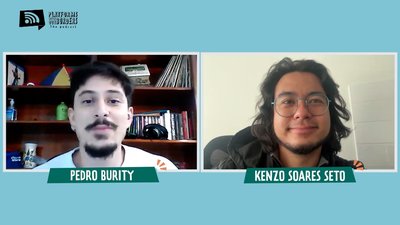
Platform Cooperativism, Technological Imaginaries, and the Algorithm of the Oppressed
In our first Portuguese episode, we welcome Kenzo Soares Seto (he), a resident researcher at Yale Law School and a fellow of the Institute for the Cooperative Digital Economy.Drawing on his unique trajectory, from street activism to parliamentary advising and academic research, Kenzo guides us through a profound discussion about the future of work and technology. He presents central concepts from his research, such as "platform subimperialism" and the "algorithm of the oppressed," showing how current digital technologies and big tech companies reproduce power relations and oppression in a Global South context.
The conversation moves on to practical alternatives: how can we build sovereign public policies and technologies that put control of data and algorithms in the hands of workers and communities?
With concrete examples, such as the initiatives of the MTST Technology Center and data_labe, Kenzo demonstrates that another digital world is possible, based on the solidarity economy, platform cooperativism, and the pedagogy of Paulo Freire.
This episode is an invitation to rethink technology not as a tool of exploitation, but as an instrument of liberation and the construction of dignified work for all.
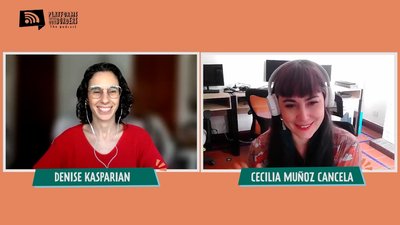
Understanding to Transform: From Worker-Recovered Enterprises to Cooperative Platforms
Cecilia Muñoz Cancela (she) interviews Dr. Denise Kasparian (she), an Argentine professor and researcher (UBA-CONICET). She shares her extensive experience with innovative forms of labor organization, from worker-recovered enterprises to her more recent research on cooperative platforms. The researcher offers insightful perspectives on the role of conflict as a driver of innovation in the development of self-managed organizations.
She also provides details on the Coopcycle delivery platform and the challenges of implementing it in Argentina. Furthermore, she shares action-research methodologies that involve building joint agendas: \"We work together to make this happen, and we also work together to learn as we go.\" Finally, she offers recommendations for enriching research methodologies for students and professionals, as well as potential topics that could contribute to social transformation. No less importantly, she also discusses exercises for imagining a cooperative, solidarity-based future rooted in existing practices.
Womens vision: technology to improve working conditions
In this episode, Veronica Uribe (she) talks to Dr. Maga Miranda (she/they), interdisciplinary scholar and Chau Mellon postdoctoral fellow at Pomona College. Maga shares with us her research and activist work with care workers in California and across the US border. At the beginning of the conversation, Maga reflects on her childhood in Los Angeles, their tías, and their motivation for starting this research project, and organizing work with care workers in Southern California.
The researcher also narrates her long-standing collaboration with the California Domestic Workers Coalition (CDWC). Maga has helped the coalition deploy efforts to leverage platforms to improve the quality of care workers' jobs. In particular, Maga and Veronica discuss Alia, a portable benefits platform that makes it easy for employers and clients to contribute to benefits for domestic workers.
Finally, the author discusses how platforms like Alia help workers connect and organize to improve working conditions and advance legislation in California.